If you have been comparing Coral Springs against pricier stops like Boca Raton or Parkland, you have probably already run into the same headline twice this year: Broward County homeowners are getting the largest Citizens Property Insurance rate cut of any county in Florida. It sounds like unambiguous good news, and for a lot of buyers it will be. But the number that made the news release does not tell you which houses actually collect it, and in a city built almost entirely between the 1970s and early 2000s, that distinction is where an offer either holds together or falls apart at underwriting.
The number everyone is repeating
Governor Ron DeSantis announced in January that Citizens policyholders across all 67 counties would see rate relief at their 2026 renewals, with a statewide average reduction of 8.7 percent. Broward County came in well above that average at 14.1 percent, the deepest cut in the state, ahead of Miami-Dade's 14.0 percent and Palm Beach's 11.9 percent. That is real money. On a $6,000 annual premium, a 14 percent reduction is roughly $840 back in a homeowner's pocket every year, and it is the kind of detail that shows up in a lot of Coral Springs listing conversations right now because it changes the monthly-payment math buyers run before making an offer.
Here is the part that headline leaves out. Citizens sets its rates on a county-wide basis, but Citizens is not the market that decides whether an individual house is insurable at a reasonable price, or insurable at all. That decision is made house by house, and the variable private carriers weigh most heavily is roof age.
Why roof age is doing more work than the rate cut
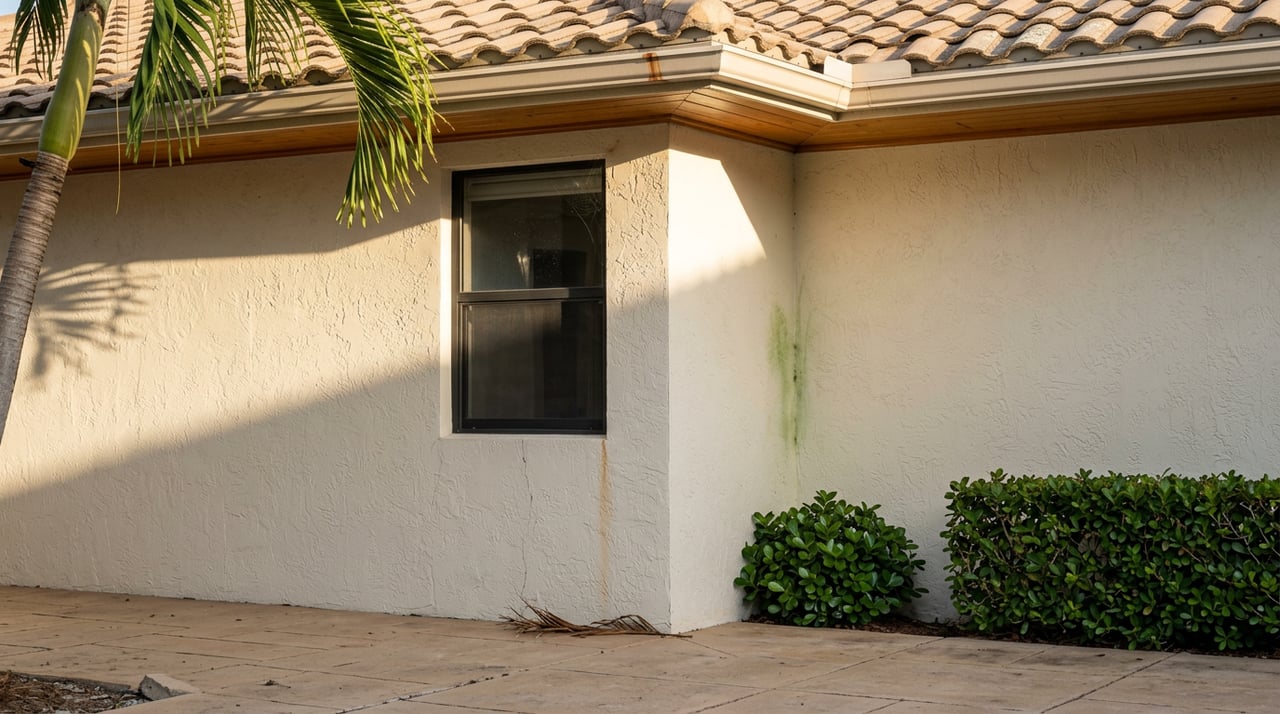
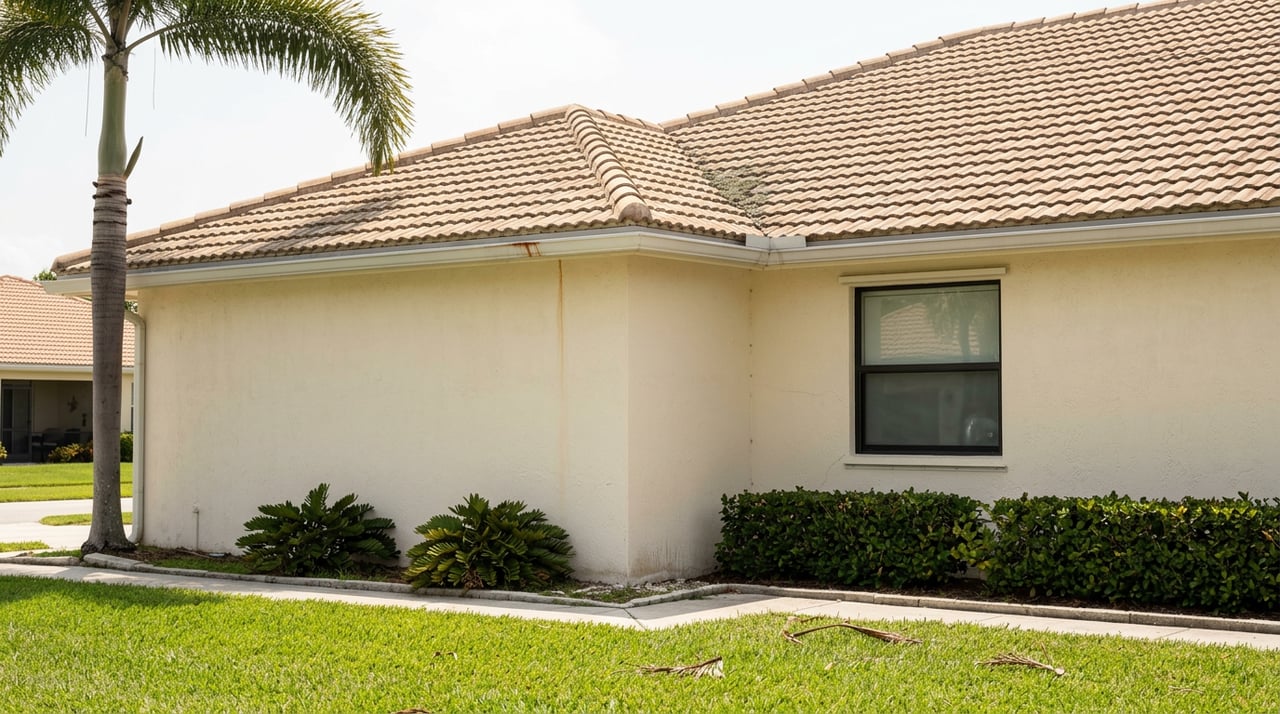
Coral Springs was built out mostly between the 1970s and the early 2000s. Established sections like Maplewood, Cypress Run, and Ramblewood East date to the earliest wave of construction, while communities like Wyndham Lakes went up between 1994 and 2004. That means a large share of the city's tile and shingle roofs are now on their original underlayment, and tile underlayment has a service life of roughly 20 to 25 years. A lot of Coral Springs roofs are past that window or closing in on it fast.
Insurers treat roof age as a primary underwriting variable, not a minor adjustment. A roof older than 15 to 20 years commonly gets paid out at actual cash value instead of full replacement cost if it is damaged, and it can push a home out of eligibility with some private carriers entirely, funneling the owner back toward Citizens as the insurer of last resort. So the same 14.1 percent county-wide discount applies very differently depending on which side of that roof-age line a specific house sits on. A newer roof captures the full benefit of a softening market. An original 1980s tile roof may be fighting for coverage at any price, discount or not.
There is one protection worth knowing if you are on either side of a transaction. Under current Florida law, a homeowner with a roof 15 years or older is entitled to an inspection before an insurer can refuse coverage based on age alone, and if that inspection shows five or more years of useful life remaining, age alone cannot be the reason for denial. That single inspection can be the difference between a policy renewal and a forced re-roof before you can close.
Two houses, same price, very different bill
Picture two homes listed within a few thousand dollars of each other in Coral Springs this month. One sits in an established, non-gated section built in the late 1970s with its original tile roof never replaced. The other is a similarly sized home in a section built in the late 1990s, already through one re-roof cycle. On paper, both are competing for the same buyer at roughly the same price. In practice, the older roof may only qualify for Citizens coverage, priced with an actual cash value roof settlement and little room to shop for a better rate. The newer roof qualifies across multiple private carriers, captures the full 14.1 percent Broward cut at renewal, and may even earn an additional 25 to 45 percent reduction on the wind portion of the premium if it passes a wind mitigation inspection.
That gap does not show up in the listing price. It shows up in the first insurance quote, usually after an offer is already in and the clock on due diligence has started.
What this means against the price you are actually comparing
Coral Springs sold for a median of $592,000 over the three months ending May 2026, according to Redfin, with homes going under contract in around 65 days, down from 86 days a year earlier. That median sits well below the equivalent price band in Boca Raton or Parkland, which is the affordability story most buyers already know before they start looking. What the median does not show is the spread underneath it. Established, non-gated single-family homes generally run from the high $300,000s to the high $500,000s. Updated homes in premium school zones push into the $500,000s and $800,000s. Luxury estates in gated communities like Eagle Trace and Cypress Run run from roughly $700,000 up past $1.2 million. Condos in the surrounding corridor land between $200,000 and $450,000.
Two homes at the same point in that range, built in different decades, are not really the same asset once you price in the insurance question. A buyer comparing a $500,000 home in an older section against a $500,000 home in a newer one is not just comparing square footage and finishes. They are comparing two different insurance underwriting outcomes that will shape the true monthly cost for as long as they own the place.
What to check before you write an offer
If you are seriously looking in Coral Springs, a few questions belong in your due diligence before the insurance question surprises you at closing:
- Ask for the roof's installation date and permit record, not just its visual condition. A roof that looks fine from the driveway can still be past its underlayment life.
- Request a wind mitigation inspection early. It documents whether the roof and openings qualify for the private-market discounts carriers are currently competing to offer.
- Get an actual insurance quote before you remove your inspection contingency, not an estimate. Citizens' county-wide rate cut tells you the ceiling. It does not tell you whether the house qualifies for anything close to it.
- If the roof is 15 years or older, ask whether a recent inspection exists showing remaining useful life. That document is the difference between negotiating a credit and losing the house to a denied policy.
None of this changes what Coral Springs offers relative to its neighbors. The price gap against Boca Raton and Parkland is real, and the insurance market is genuinely easing for the first time in years. It just means the number worth asking about is not the county average. It is the specific roof on the specific house.
Quick Answers
Does the 14.1 percent Broward cut apply automatically to every homeowner? It applies to Citizens policyholders at their 2026 renewal, and the reduction is an average across the county's roughly 27,000 affected policies. Individual outcomes still depend on the home's risk profile, including roof age and condition.
Is a roof over 20 years old automatically uninsurable? Not automatically. Florida law entitles homeowners with roofs 15 years or older to an inspection before a carrier can deny coverage on age alone, and a roof showing five or more years of remaining useful life cannot be denied for age by itself. But in practice, older roofs narrow private-market options and often shift homeowners toward Citizens or actual cash value settlements.
Should I ask the seller to replace the roof before closing? That is a negotiation between buyer and seller based on inspection findings and the specific insurance quotes you receive. What matters is getting a real quote and a documented roof age before your contingency period ends, so the decision is based on facts rather than the general market headline.
Coral Springs rewards buyers who read past the county average. If you are weighing this market against Boca Raton, Parkland, or anywhere else in West Boca and northern Broward, AJ Bergman can walk the specific insurance and roof-age math on any address you are considering before you write an offer. Get Your Free Home Valuation to start the conversation.